In short: To write an artist bio, say who you are, what you sound like and what you have done, in the third person, in plain sentences. Write three versions: one line (under 25 words), a short bio (about 80 to 120 words) and a full bio (300 to 500 words). Lead with the most recent fact, include only things you can prove, and update it with every release.
This guide is for solo artists, bands, DJs and producers who need a bio for a streaming profile, a press email, a festival form or a website, and who find writing about themselves awkward. Nothing here needs a publicist.
It covers what a bio is for, what goes in it, how to write it in three lengths, templates with blanks you can fill, a worked example for an invented act, a before-and-after edit, where each length goes, the mistakes that make bios useless, and how to keep them current.
What is an artist bio, and who reads it?
An artist bio is a short piece of writing, usually in the third person, that tells a stranger who you are and why they should listen, book or write about you. Writers copy from it, promoters skim it for a fit, playlist editors look for a hook, and listeners read it on your profile.
Most people read a bio in a hurry, with a specific question. A booker asks, "Would this suit my night?" A writer asks, "Is there a story, and can I describe them without getting it wrong?" A listener asks, "What is this, and is it like what I already like?" A good bio answers all three in the first two sentences.
That is why a bio is not a diary. It does not list every gig, or every influence, or every year. It picks the few facts that give a stranger a clear picture, in the order that matters most to them.
It is also a working document. Journalists often paste from it, so the sentences you write may end up in print under someone else's name. In a Muck Rack Q&A from July 2025, two journalists said they want pitches that show an understanding of what they cover. A bio that is clear and specific gives a writer what they need to do that for you.
What goes in an artist bio?
A bio needs your name, where you are from, what kind of music you make, what you have released or done lately, and one detail that is only true of you. Add a link or contact line if the place it appears allows one. Leave out everything else.
Here are the building blocks, in the order most readers want them.
- Who and where. Your name, whether you are a solo artist, duo or band, and your city. "A four-piece from Pune" tells a reader more than "an exciting new act".
- What it sounds like. One or two plain descriptions of the music and, if you want, a reference to a sound the reader knows. A reference should help, not borrow someone else's fame: "songs built on slow guitar and Marathi lyrics" is better than "the next big thing".
- What you have done. Releases, shows, collaborations, awards and press, newest first, only those that are true and checkable. One strong item beats five weak ones.
- What is happening now. The release, tour or project that is the reason someone is reading today. Date it.
- The detail only you have. How the band formed, the language you write in, the unusual way you record, the cause you play for. This is the line a writer will quote.
- Where to listen or get in touch. A link or email where the format allows.
You do not need a dramatic origin story. If the true story is that two friends in a college band started writing songs, say that plainly. Plain and specific is better than dramatic and vague.
If you have an electronic press kit, the bio is one part of it. Our electronic press kit guide shows where the bio sits with photographs, music and contact details.
How long should an artist bio be?
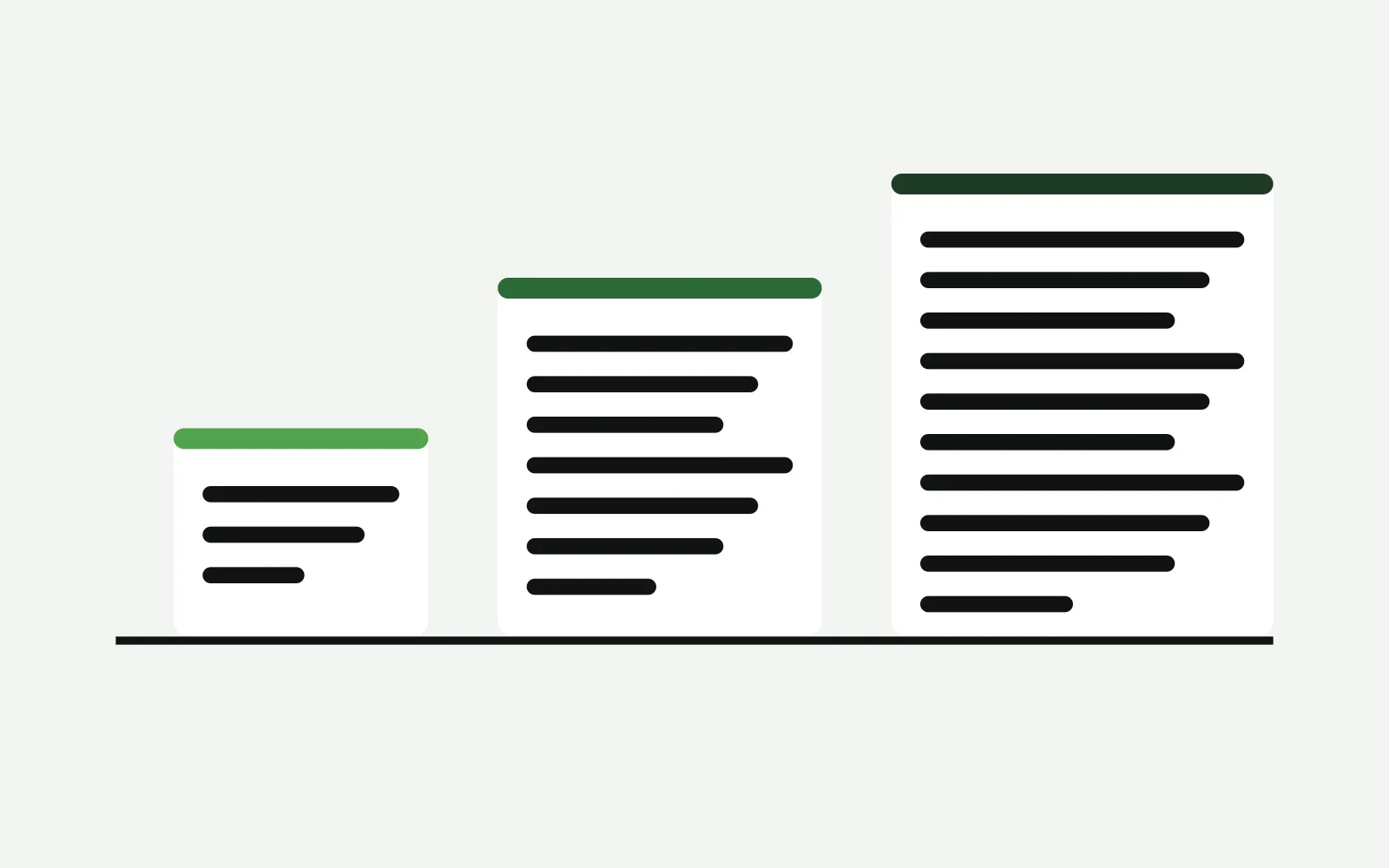
Write three: a one-liner of under 25 words, a short bio of about 80 to 120 words, and a full bio of 300 to 500 words. Each place you use a bio has a different space and a different reader, so one length cannot serve them all.
The table shows each length, what it holds and where it goes. The word counts are working guides based on common practice, not rules from any platform.
| Version | Length | What it holds | Where it goes |
|---|---|---|---|
| One-liner | Under 25 words | Who you are, your sound, your city | Social profile, event listings, a caption under a photograph, an email introduction |
| Short bio | 80 to 120 words | The one-liner plus the latest release or milestone and one distinctive detail | Streaming profile, a festival or open mic form, a poster, a booking email |
| Full bio | 300 to 500 words | The story in order, key releases and shows, the people involved, the current project | Your website, press kit, press release, a long interview request |
Write the full bio first, then cut it down. It is easier to take a true, detailed 400 words and trim to 100 than to inflate 100 into 400. When you cut, drop the oldest and least relevant facts first and keep the newest.
Count characters as well as words if you are filling a form. Spotify for Artists says a profile bio can be up to 1,500 characters, and lets you link to artists, albums, playlists and tracks with @tags or pasted links. That is roughly 250 words, so a short bio fits easily and a full bio may need trimming. The same page says the bio has to follow the Spotify Platform Rules, and that content that breaks them is removed.
Should an artist bio be in first or third person?
Write it in the third person ("Aarav writes...") for press, booking and streaming profiles, because other people will copy it as it stands. Use first person only where the place invites a personal voice, such as a short social caption or a letter.
The reason is practical. A journalist or promoter wants to paste a sentence into their own writing. If your bio says "I", they must rewrite it, and they may not bother. If it says "she" or "the band", they can quote it.
Third person does not mean stiff. Write the way you would explain the band to a friend's parent: clear sentences, ordinary words, no adjectives you would not say aloud. Read the bio out loud. If you would not say it, change it.
A few rules of thumb for a third-person bio:
- Use your act name for the first mention and a pronoun or "the band" after that. Avoid writing the full name in every sentence.
- Use the same tense throughout: past tense for what has happened, present for what is true now.
- Pick "they" or "she/he" as the act prefers, and check how the band is referred to, singular or plural.
- If a bio quotes a member, put the words in quotation marks and say who said them. The University of Nebraska-Lincoln Extension's press release guide advises attributing quotes with "said" and the speaker's name, and keeping opinions, not facts, in the quote.
How do you write a one-line bio?
A one-line bio has one job: give the reader a picture in a single sentence. Name the act, the type of music, the place and one fact. Keep it under 25 words and put no adjectives in it that you cannot prove.
Use this template, and fill every blank with a concrete word:
[Act name] is a [solo artist / duo / four-piece] from [city] making
[plain description of the music] in [language or languages].
Add one more clause if you have something real to point to:
[Act name] is a [duo / band] from [city] making [description of the music],
with a new [single / EP / album], [title], out [date].
Examples, using an invented act:
- "The Placeholders are a four-piece from Kochi making slow, guitar-led songs in Malayalam and English."
- "Mira Sen is a producer from Kolkata making warm, sample-heavy dance music, with a debut EP due in March."
These acts are made up for illustration. Do not copy the facts, only the shape.
The one-liner is the most used line you will write. It goes under photographs, in event listings, in the first line of an email and beside your name on a bill. Spend ten minutes on it.
How do you write a short bio?
A short bio is one paragraph of about 80 to 120 words. Open with the one-liner, then add what is new, one achievement a reader can check, and a link or contact. Keep to four sentences or five short ones.
Here is the template:
[Act name] is a [description] from [city]. [One sentence on the sound:
what it is built on, what language, what it is like to hear live.]

[Latest release or project, with its date, and one fact about it:
who made it, where it was recorded, what it is about.]

[One credible track record item: a festival, a venue, a collaboration, a
piece of press, with its name and year.] [Optional: one line on how the
act began.]

[Call to action: listen at / book at / contact at].
And a version filled in for the invented act:
The Placeholders are a four-piece from Kochi making slow, guitar-led songs in Malayalam and English. They write about coastal towns and night shifts, and play with room to let the quiet parts breathe.
Their debut EP, Tide Tables, was recorded live over two days and came out in [month, year]. [Real credit: a named festival or venue and the year.]
Listen at [link], or book them at [email].
The square brackets mark facts that only the real act can supply. In a real bio, fill each one or cut the sentence. A bio with an invented festival in it will be found out, and the damage lasts longer than the gap.
Check the paragraph against these four questions:
- Can a stranger tell what kind of music this is?
- Is there at least one fact with a date or a name that can be checked?
- Is the newest item first?
- Does the reader know what to do next?
How do you write a full artist bio?
A full bio runs 300 to 500 words in four or five short paragraphs: the opening picture, the story so far, the work in detail, the current project and a close with contact details. Write it as something a journalist could lift a paragraph from without changes.
The structure is simple, and it works for most acts:
- Paragraph one: the picture. The short bio, tightened. Name, place, sound, and the reason someone is reading now.
- Paragraph two: the origin. How the act came to exist. Keep it to the facts: who, where, when, what changed. If there is nothing interesting, keep it to two sentences.
- Paragraph three: the work. Releases, shows and collaborations, in the order that serves the reader. Group them: "Since 2023, the band has released two EPs and played [list real venues or festivals]."
- Paragraph four: the current project. What is coming, with dates and one detail that makes it different. A quote from a member can go here.
- Paragraph five: the ask. Where to listen, how to book, who to write to for press.
Here is a template for the full version, with blanks:
[Act name] is a [description] from [city], making [music in plain words]
in [language(s)].

The act began in [year] when [what actually happened: two friends met
at a college show, a producer started releasing under a new name,
a band reformed after N years]. [One sentence on how the sound developed.]

Since then, [Act name] has released [list real releases with years]
and played [real venues, festivals or events, with years]. [One
sentence on a collaboration or credit, only if real.]

In [month, year], the act will release [title], [one fact: where it was
recorded, who produced it, what it is about]. "[Quote from a member
about the project, one sentence]," says [member name], [role].

[Act name] is [available for bookings / releasing on label].
Listen at [link]. Press and bookings: [email].
The quote is optional, but it is the most useful piece for a writer. Keep it to one sentence of opinion or feeling, not facts, which belong in the paragraph itself. The Nebraska Extension guide makes the same point about release quotes: use them for opinion or context, and put statistics in the main text.
A full bio is also a good place for a short list of "selected credits" if you have a real history: festivals played, releases, collaborations, press. Use a simple list with years, and link to the source of any press quote.
Can you see a before-and-after edit?
Yes. The table shows common bio lines rewritten into plainer, checkable versions. The invented lines on the left are typical of first drafts; the ones on the right show what to put in their place.
| First draft | The problem | Rewritten |
|---|---|---|
| "A unique, genre-defying sound that takes listeners on a ride" | Nothing a reader can picture or check | "Slow guitar songs with a drum machine, sung in Hindi and English" |
| "Rising star of the independent scene" | A claim, with no evidence | "Played [named venue] in [year] and [named festival] in [year]" |
| "Influenced by everyone from jazz greats to modern pop" | Too broad to mean anything | "Writes with a jazz bassist's sense of space and a pop writer's love of a short chorus" |
| "I started playing guitar at age seven" | First person, and about the childhood, not the act | "The band formed in [year] in [city] after [what happened]" |
| "Their music is for everyone" | Says nothing about the sound | "Songs for late buses and rainy-season evenings" (only if true of the work) |
| "Check out their new single out now" | "Now" goes stale, and no title or date is given | "Their new single, [title], came out on [date]" |
The pattern is the same each time. Replace praise with a fact, replace "now" with a date, and replace a general claim with something a stranger could check. If you cannot replace it, cut it.
Do not use praise you gave yourself. If someone else said it, quote them and link the source. If nobody has said it yet, leave it out, since an unsourced compliment reads as a claim and may lose you the reader.
Where should each bio go?
Put the one-liner wherever space is tight, the short bio on profiles and forms, and the full bio on your website and press kit. The table below lists common places and the length that suits each. Check each platform for its current limit, since they change.
| Place | Length to use | Notes |
|---|---|---|
| Spotify for Artists profile | Short or a trimmed full bio | Up to 1,500 characters at the time of writing (November 2026); @tags link to your releases |
| YouTube channel description | Short | Appears in the channel header; it must follow the Community Guidelines, per YouTube Help |
| Instagram profile | One-liner | The bio field is small; check the limit in the app. Our Instagram profile guide covers the rest |
| Your website | Full, with the one-liner at the top | See our musician website guide for where it goes |
| Press kit or EPK | One-liner, short and full | Offer all three so the writer can choose |
| Festival or open mic form | Short, or what the form asks for | Follow the stated limit exactly; do not paste the full bio |
| Poster and event listing | One-liner | Check how the promoter wants the act described |
| Booking email | One-liner in the text, short as a signature or link | See our guide to getting gigs in India |
On Spotify for Artists, the help page says a bio can be edited by Admins and Editors, on the web through View Profile and then About, or in the app under the Profile tab. The profile bio is not the only text people see, so keep the wording consistent with your other places. A stranger who finds you on three platforms and reads three different stories will not know which is true.
Copy the same facts everywhere, in lengths that fit. Keep a single document, with the three bios and the dates of the last update, so that you copy from one source and not from the last place you edited.
What mistakes make an artist bio useless?
The common mistakes are vague praise, a list of influences instead of a description, a long origin story, out-of-date facts, no link, and a different story on each platform. Most can be fixed in one pass of editing.
- Adjectives instead of facts. "Powerful, emotive, genre-bending" says nothing. Say what the music is made of and where it has been played.
- Name-dropping. A list of famous acts you sound like invites comparison and tells the reader nothing about you. One honest reference is plenty.
- Starting too early. A reader does not need your school years unless they explain the music. Start where the act starts.
- Stale facts. "Currently working on their debut" in a bio two years after the debut came out. Put dates on everything and check them each release.
- Unverifiable claims. "Played to thousands" or "featured in leading publications" without a name. If you cannot name it, cut it, because an inflated bio is easy to check.
- Wrong tense and person. Mixing "I" and "the band" in one paragraph reads as unedited.
- No next step. A bio with no link or contact line leaves the reader to search for you.
- Typos and name errors. A misspelt band or city in your own bio will be copied into everyone else's work.
- Different names. A change of spelling, capital letters or punctuation across platforms makes you harder to find. Decide the form of your name and use it everywhere.
One more mistake is to write the bio for the people who already know you. Show it to someone who has never heard of the act, and ask what they think the music sounds like. If their answer is wrong, the bio is.
How do you keep a bio current?
Update the bio at every release, every tour or season, and at least twice a year even if nothing seems to have changed. Keep the master document, and replace the newest sentence and the date, so the rest of the bio stays stable.
A short routine makes this painless:
- Keep one document with the three bios, a list of key facts (releases, dates, venues) and the date of the last edit.
- When something new happens, add it to the key facts the same week, while the details are fresh.
- At each release, move the new item to the top of the bio, cut the oldest least relevant line and update the one-liner if the sound has changed.
- Copy the new text to each place it is used. Use the table above as a checklist.
- Re-read the press kit and website bio once a quarter. Remove anything that is no longer true.
Update your photographs when you update your bio, so the two match the act as it is now. Our guides to press photos for musicians and brand identity for musicians explain how to keep the look and the words in step.
If you work with a label, a distributor or a manager, tell them when the bio changes. Otherwise a dated version will keep appearing in places you do not control.
Can someone else write your bio?
Yes, and a good outside writer often does it better, because they see the act as a stranger would. They need the facts from you, though: the dates, the names, the quotes and the links. A writer who invents the details is doing you harm.
If you ask a friend or a writer, give them a short brief:
- Your act name, spelled exactly as you want it.
- The members, with roles and the names to use.
- Releases and shows, with dates and links.
- Three words you would use to describe the sound, and three you would not.
- The reason the bio is needed now.
- One quote you are happy to have used.
Check every fact in the draft yourself. A bio written for you still carries your name. Never use a generator or a template that fills in praise you did not earn; a bio built from stock phrases reads like one and will not help you stand apart from the thousand other bios in a booker's inbox.
If you do use any tool to help with a first draft, rewrite it in your own words and check each sentence against the facts. A bio is only useful if it is true and sounds like you.
A checklist before you publish a bio
Run this list on every version before it goes out:
- The act's name is spelled the same way as everywhere else.
- It is in the third person and one tense.
- The first sentence says who you are, what you sound like and where you are from.
- Every claim can be checked, and every number has a source.
- The newest item comes first, and everything has a date.
- There is a link or an email address.
- It fits the space, in words or characters, with no cut-off sentence.
- Someone who does not know the act has read it and described the music correctly.
- No sentence would embarrass you if the person named read it.
- The document with your three bios has been updated, with the date.
Questions people ask
How long should an artist bio be?
Write three lengths. A one-liner under 25 words suits profiles and captions, a short bio of 80 to 120 words suits streaming profiles, forms and booking emails, and a full bio of 300 to 500 words suits your website and press kit. Spotify for Artists allows up to 1,500 characters at the time of writing (November 2026).
What should I include in my musician bio?
Include your name, where you are from, what your music sounds like, your latest release with its date, one checkable achievement such as a named venue or festival, one detail only true of you, and a link or email. Leave out long influence lists, school history, vague praise and anything you cannot prove.
Should I write my bio in the first or third person?
Use third person for press, booking and streaming profiles, because journalists and promoters copy lines from it directly. First person is fine for a short caption or a personal note on your site, as long as you keep each bio in one voice. Read it aloud, and keep the sentences plain.
How do I write a bio if I have not released anything yet?
Say what you are working on and what you have actually done: where you play, the language you write in, the kind of songs, any shows. Describe the sound in plain words, give one concrete detail, and add a contact line. Do not invent credits or press. A short, honest bio is better than a padded one.
Do I need a different bio for Spotify, Instagram and my website?
Use the same facts in different lengths. Spotify and your website can carry a short or full version, and Instagram needs a one-liner. Keep your name, genre, city and latest release identical everywhere, so a stranger who finds you on several platforms sees one consistent story.
How often should I update my artist bio?
Update it at each release and at least twice a year. Add the new item, remove the oldest least relevant line, and change the date. Keep a master document with all three versions and copy from it to each platform, so no place is left showing old news.
Can I use AI to write my artist bio?
You can use a tool for a rough first draft, but check and rewrite every sentence. Tools tend to add praise and facts you cannot support, and a bio full of stock phrases reads like it. Write from your own list of facts, in plain words, and have someone who does not know you read it.
If a bio needs pictures to go with it, Jayde Records takes press photographs and portraits, films live sessions and short clips, and builds websites for musicians where the bio, photographs and music sit together. Send us a note at our contact page or work@jayderecords.com, and we reply within 24 hours.